City guide — New York City, New York

Getting married in New York City

A New York wedding is decided less by the venue than by the borough: a Tribeca loft, a Brooklyn foundry, a Central Park lawn, a Hudson Valley barn and a Long Island tent are five completely different events with five different budgets. The city is also the most regulated wedding market in the country — permits, licences, insurance and building rules all land at once. Get them in order and the rest is dinner.

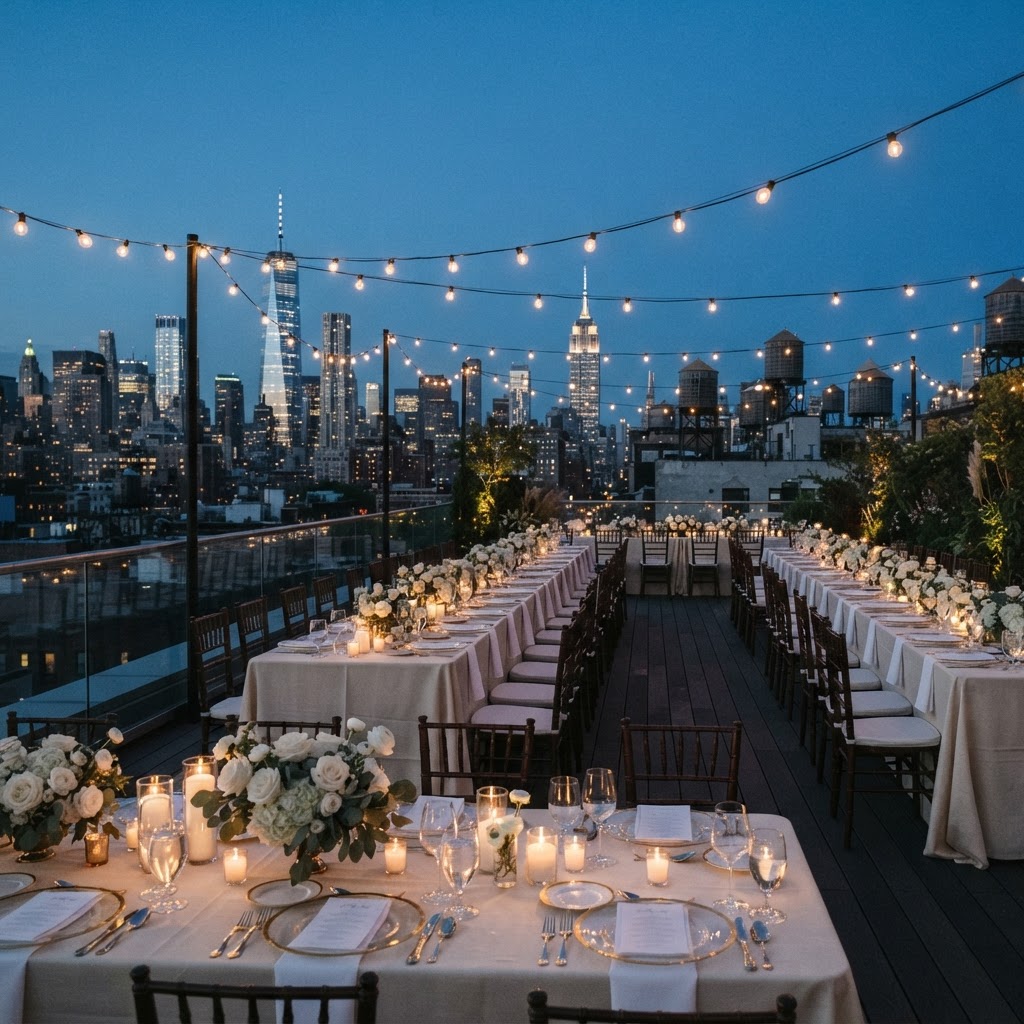
A Tribeca rooftop terrace set for a reception at dusk, Manhattan skyline behind
Best months
Mid September to early November, mid May to mid June
Summer reality
85–95°F and humid, with no relief until after dark
The red tape
Liquor licence, park permits, insurance and building rules
Drive times
35–70 minutes Manhattan to JFK or LGA, more at rush hour

01 — The season

Two good windows, one very good indoor season

The city is at its best from mid September to early November and again in late May and June. Everything else is a trade: heat and humidity in July and August, cold and dark at 4.30pm in January.

Peak Saturdays in those windows cost 20 to 40 percent more than a Friday or Sunday in the same month, and the best venues are booked 14 to 18 months out. If your date is fixed by a venue you love, accept the shoulder month and spend the saving on the parts guests remember.

Winter is a real option indoors: hotel ballrooms, museums and lofts are at their best in candlelight, and January and February are the cheapest months for both venues and hotel blocks. Just move the whole run of show earlier — sunset is before 5pm for most of December and January, so portraits happen before the ceremony, not after.

Check the city calendar before the date

The UN General Assembly in September, the New York City Marathon on the first Sunday in November and the US Open in late August all take hotel rooms and cars. Restaurant Week does not affect you; those three do.

Foliage is a Hudson Valley decision

If you are looking upstate for a barn or estate, the last two weekends of October are the most expensive of the year and traffic north on a Friday is genuinely bad. Mid September and early October are the better-value edges.

Heat is a transit problem

A July ceremony means guests in formalwear on subway platforms. Build air-conditioned transport between hotel and venue, or choose a venue both can reach by car.

02 — Geography

Pick a venue cluster, then put the hotel block inside it

Manhattan, Brooklyn, Queens, Hudson Valley, Long Island and northern New Jersey do not share a traffic pattern, a price level or a guest experience. A Manhattan hotel block and a Hudson Valley venue is a two-hour coach ride on a Friday afternoon.

Decide in this order: venue, then hotels within fifteen minutes of it, then transport. Guests will forgive a 40-minute ride from the airport. They will not forgive a 90-minute shuttle at midnight.

Downtown versus Midtown

Tribeca, SoHo and the Financial District give you loft space and cobblestones. Midtown gives you hotel ballrooms, views and the theatre crowd. Both work; they suit different weddings.

Brooklyn is not a suburb

Greenpoint, Williamsburg, Bushwick and Industry City are 20 to 40 minutes from Midtown by car and longer on a Friday. Check the load-in door and the freight elevator before anything else.

Outer venues need transport, not hope

Anything beyond the five boroughs needs contracted coaches with a set departure, plus a plan for guests who miss them. Price the coaches before you sign the venue.

03 — Local rules

Licences, permits and the service charge nobody mentions

In New York, alcohol, sound and public space are all licensed separately. A venue that looks perfect can still stop you at any one of them.

Alcohol needs a licence

Either the venue holds an on-premises liquor licence, or your caterer does, or you apply for a one-day permit through the State Liquor Authority. You cannot simply buy the wine and serve it yourself without a licensed server.

Park and landmark permits

Ceremonies in Central Park, Brooklyn Bridge Park, Prospect Park and Governor’s Island need a permit, and each has its own rules on chairs, arches, amplification and setup windows. Some landmark sites also require you to use their approved vendors.

Sound curfews are written down

Amplified music outdoors usually has to stop well before midnight, and rooftops are stricter than ground-floor rooms. Get the exact time in writing and place the last dance before it.

Budget the real total

New York quotes usually exclude 8.875 percent sales tax and a service charge of 22 to 26 percent, and many venues add an administrative fee on top. Ask for a final, all-in number per guest before comparing anything.

Certificates of insurance are mandatory

Almost every building and park requires a COI from each vendor naming the venue, often 30 days out. Collect them early — this is the single most common cause of a stalled load-in.

04 — Venues

The venue types that define New York weddings

These are the categories planners here work with most, and what each one actually asks of you.

Manhattan hotels and ballrooms

The safest answer for out-of-town guests and for winter, with the hotel block in the same building. Expect food and beverage minimums, union labour rules and a room that needs a lot of décor to stop looking like a ballroom.

Lofts, studios and rooftops

Tribeca, SoHo, the Flatiron District and Long Island City. Volume, light and views. Confirm the freight elevator, the load-in window, air conditioning for a full count and the sound limit before you fall for the room.

Brooklyn warehouses and foundries

Greenpoint, Williamsburg, Bushwick and Industry City. Raw space and real character, usually with a required vendor list for catering, and a walk from the subway that guests will notice in heels.

Museums, libraries and cultural institutions

Grand rooms, tightly managed. Expect approved caterer lists, fixed load-in and load-out times, restrictions on flame and confetti, and premium rental fees for weekend evenings.

Hudson Valley estates, farms and barns

Ninety minutes to two hours north. Space, views and control, with transport, tents, generators, restrooms and local noise rules all becoming your problem.

Parks and waterfront sites

Central Park, Brooklyn Bridge Park, Governor’s Island and the waterfront piers. Beautiful and public: permits, no amplification in many spots, hard setup windows and a rain plan you carry yourself.
06 — Before you book

Questions to ask a Houston venue

Ask these before a deposit leaves your account. A vendor who answers all ten without flinching is worth the date.

  • Does the venue hold its own liquor licence, or does our caterer need one?
  • What exactly is the sound curfew, and does it change outdoors or on a rooftop?
  • Is there a freight elevator, and what is our load-in window?
  • What is the all-in cost per guest once tax, service charge and admin fees are added?
  • Does the venue require a certificate of insurance, and how far in advance?
  • Which vendors are exclusive, and which can we bring in ourselves?
  • Where do guests get dropped off, and is there a covered waiting area?
  • Is the backup space indoors and the same size, or a different room?
  • What are the rules on candles, open flame, confetti and hanging installations?

Choosing a month

January – February

Coldest and cheapest. Best for ballrooms and museums; move portraits before the ceremony.

March

Cold and grey, with occasional warm days. Vendor and venue availability is at its best.

April – May

Spring arrives late. Late May is the start of the good window, with holiday-weekend hotel pressure.

June

Excellent weather and peak pricing. Book venues 14 to 18 months out.

July – August

Hot, humid and quiet in the city. Indoor venues and air-conditioned transport only.

September – October

The best months. Watch the UN General Assembly and marathon weekend for hotel rates.

November – December

Crisp and festive, with early sunsets and holiday party competition for venues and bands.

Plan it in SurelyPlan

New York weddings, organised in one place

Vendor rosters with insurance and licence status, permit deadlines, budgets, client forms and a private portal for every vendor — all in one calm workspace.

For planners

Plan New York City weddings in SurelyPlan

Run every wedding from one workspace: timelines that hold your heat and rain plan, vendor rosters with insurance tracked, budgets, client forms and a private portal for each vendor.

  • AI-drafted timelines and vendor emails
  • COI and document tracking per vendor
  • Client and vendor portals with no logins to manage

For couples

Plan your own New York City wedding

Everything for one wedding in one calm place: the timeline, the guest-ready details, the budget and the vendors, without a spreadsheet holding it together.

  • One timeline you can share with family
  • Budget and payment schedule in one view
  • Vendor contacts and documents kept together