Build the timeline around the afternoon storm
In summer, ceremony at 6.30pm or later. The rain usually passes, but the humidity stays, so plan shade, water and a cool indoor space for the cocktail hour.
City guide — Miami, Florida
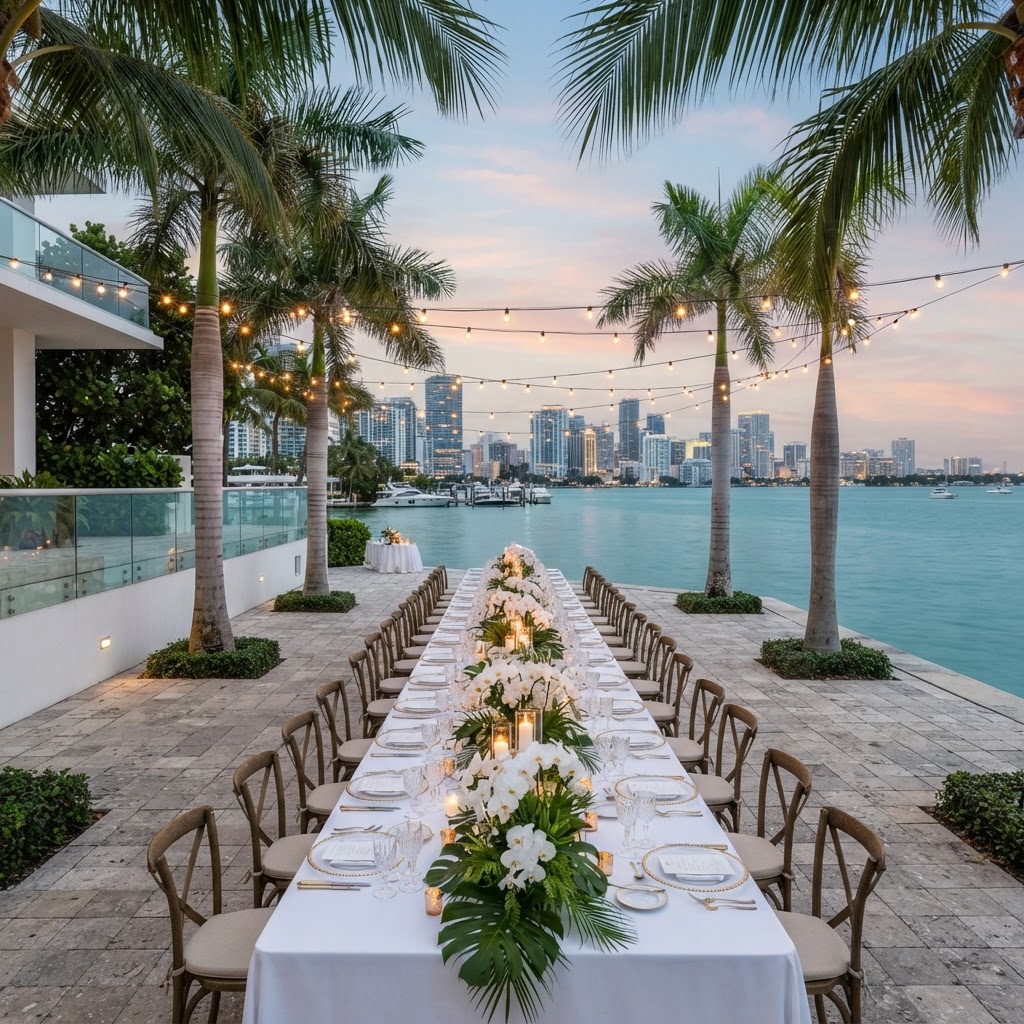
Miami does two weddings extremely well: a November to April wedding with soft light, dry air and a 6pm sunset, and a summer wedding that is entirely indoors with the ocean as a view rather than a venue. Everything between the two is a negotiation with humidity and afternoon storms. The city is also bilingual, service-driven and expensive in ways that surprise people who have only priced the venue.
01 — The season
From November to April Miami is close to perfect: 75 to 82°F, low humidity, sunsets between 5.30 and 7.30pm. That window is also peak season, and hotel and venue rates reflect it.
June to September is hot, humid and wet. The rain arrives most afternoons around 3 to 5pm and clears within an hour, which means an evening ceremony is often fine and a 3pm one rarely is. October and May are the shoulder months: cheaper, still warm, and the best value if you accept a small weather risk.
In summer, ceremony at 6.30pm or later. The rain usually passes, but the humidity stays, so plan shade, water and a cool indoor space for the cocktail hour.
Read the storm language before signing: deposit transfer to a new date, how late a decision can be made, and who pays for a tent, generator or a moved event.
Orchids, anthurium, protea, heliconia, ginger and monstera hold up. Peonies and hydrangea will not survive an outdoor Miami afternoon without constant attention.
02 — Geography
Miami Beach and the mainland are 25 minutes apart with no traffic and much longer on a Saturday night. Guests staying on the beach for a Brickell wedding will spend the weekend in a car.
Miami Beach, Surfside and Bal Harbour give you ocean and walkability. Brickell, Coral Gables and Coconut Grove give you hotels, gardens and parking. Key Biscayne and the bay-front estates give you water and quiet, with the trade of a causeway drive.
Any wedding with the venue on one side of the bay and hotels on the other needs contracted coaches with a fixed departure time, plus a plan for the last boat-free stragglers.
Noise, valet, short-term rentals and permit requirements differ from the City of Miami. Do not assume a mainland policy applies across the causeway.
Fort Lauderdale, Hollywood and Hallandale are often 20 to 30 percent cheaper for the same water and hotels, and 30 to 45 minutes from Miami International.
03 — Local rules
Every chair, arch, speaker and bottle on a Miami beach is permitted separately, and the licensing is county-by-county.
Miami-Dade County parks and beaches require a permit for ceremonies, structures, chairs and any amplified sound, and many sites ban glass, open flame and permanent setups. Apply early and confirm who files it.
The venue or caterer must hold a Florida liquor licence, or you use a licensed bar service. Self-serve bars and BYO are not permitted in most venues.
Miami Beach enforces amplified music cut-offs, especially outdoors and on rooftops. Get the time in writing and put the last dance before it.
Florida sales tax plus a 20 to 24 percent service charge is standard, and many venues add valet, security and cleaning fees. Ask for an all-in per-guest number.
Ask whether the venue and your key vendors staff bilingual teams. For a family with Spanish-speaking guests, a translated ceremony, signage and announcements change the whole day.
04 — Venues
These are the categories planners here work with most, and what each one asks of you.
Miami Beach, Surfside and Bal Harbour. The safest answer to heat and storms, with the hotel block in the building. Expect minimums, resort fees and a ballroom that needs décor.
Coral Gables, Coconut Grove and Key Biscayne. Private grounds and water views, with parking, noise rules, neighbour relations and generator power to solve.
Vizcaya, the Fairchild Tropical Botanic Garden and the Mediterranean-style villas. Extraordinary settings with approved caterer lists, hard setup windows and photography restrictions.
Wynwood, Little River and the Design District. Art, concrete and flexibility, with load-in, air conditioning and sound limits to confirm.
Semi-inclusive pricing, parking and a built-in rain plan, sometimes with a member sponsor. Prime winter Saturdays are booked over a year out.
A genuinely Miami option, and a demanding one: guest count limits, motion, weather, dock timing and a licensed crew for alcohol service.
06 — Before you book
Ask these before a deposit leaves your account. A vendor who answers all ten without flinching is worth the date.
Peak season: dry, mild and expensive. Book venues and hotel blocks early.
Still excellent, slightly softer pricing, with spring break traffic on the beach.
The shoulder month: warm, cheaper, with the first afternoon storms.
Hot, humid and stormy. Evening ceremonies and indoor receptions only.
Peak hurricane risk and the lowest prices. Insurance and a backup date matter.
The best weather of the year. Book early; rates rise through the holidays.
Plan it in SurelyPlan
Storm clauses tracked per vendor, permit checklists, budgets, client forms and a private portal for every vendor — all in one calm workspace.
For planners
Run every wedding from one workspace: timelines that hold your heat and rain plan, vendor rosters with insurance tracked, budgets, client forms and a private portal for each vendor.
For couples
Everything for one wedding in one calm place: the timeline, the guest-ready details, the budget and the vendors, without a spreadsheet holding it together.