Wind and afternoon showers
Trade winds pick up in the afternoon, which is ideal for a morning ceremony and hard on arches, veils and loose linens. Windward ceremonies should start earlier in the day.
City guide — Maui, Hawaii
A Maui wedding is a destination wedding, even for people who live in Hawaii. Guests fly five hours or more, stay four to seven nights, and expect a week rather than a day. That changes everything: the budget includes lodging for the wedding party and often the vendors, the timeline has to work around travel days, and the ceremony itself needs a permit before it can happen on sand.
01 — The season
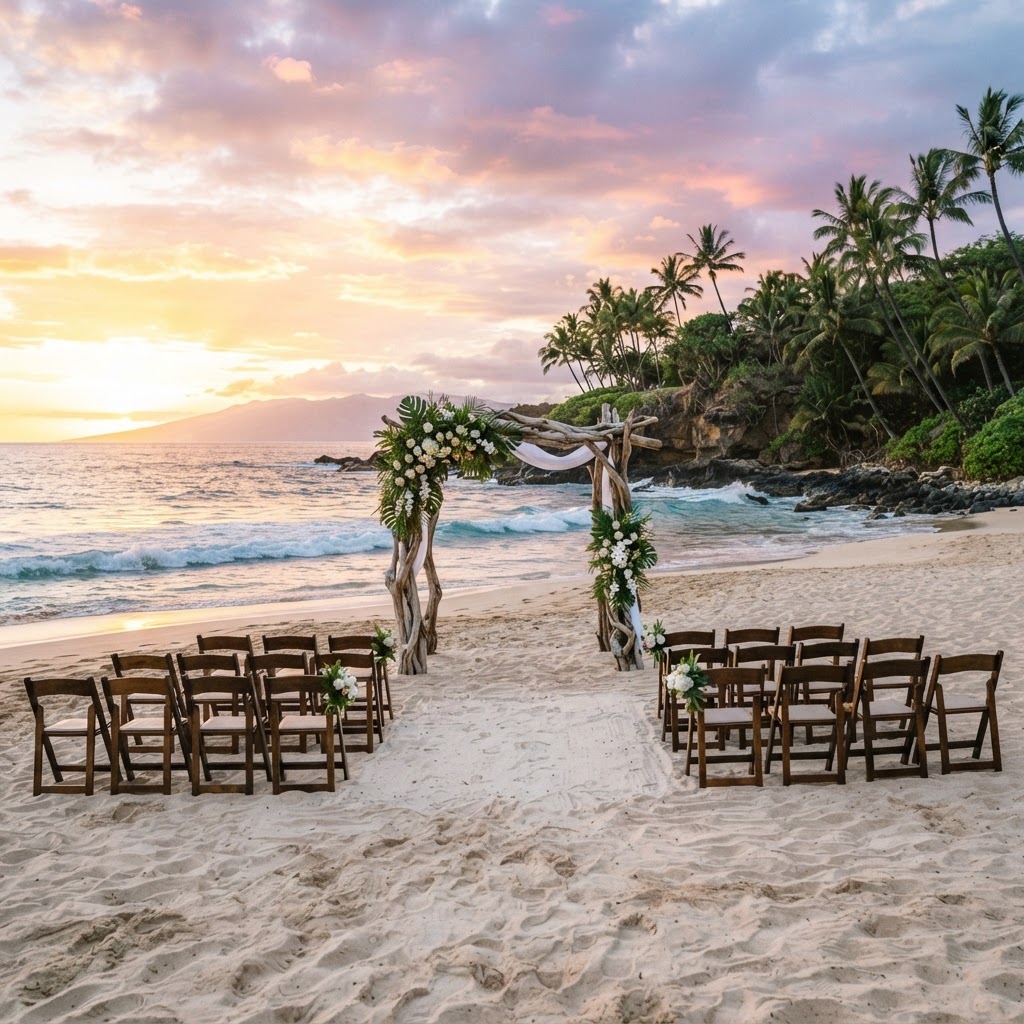
Maui is warm year-round — highs between 78 and 88°F — so the season is really about rain, wind and price. The leeward west and south coasts are dry almost always; the windward north shore and Hana are lush for a reason.
April to June and September to November are the sweet spots: good weather, softer rates and more availability. Mid December to March is whale season and the busiest, most expensive stretch — beautiful, but book flights and lodging a year ahead.
Trade winds pick up in the afternoon, which is ideal for a morning ceremony and hard on arches, veils and loose linens. Windward ceremonies should start earlier in the day.
Sunset is between 5.45 and 7.15pm depending on the month, and it is the anchor of a Maui timeline. Most ceremonies are timed 60 to 90 minutes before it.
Humpbacks are visible from shore from December to April, which is why winter weddings photograph so well on the water — and why the island is full.
02 — Logistics
Guests are spending thousands of dollars and most of a week to be there. A welcome dinner, a beach day and a farewell brunch are not extras in Maui — they are the shape of the trip.
Fly into Kahului (OGG). The drive to Wailea is about 30 minutes, to Ka’anapali 45, and to Hana two and a half hours on a road most guests should not drive after dark. Choose one coast and build everything on it.
Wailea, Kihei and Lahaina are dry and resort-heavy. Paia, Haiku and Hana are lush and rural. Mixing them means an hour in the car for every event.
Many photographers, florists and officiants are based on one side of the island and charge travel for the other. Confirm travel fees and load-in times early.
A hotel block in Wailea or Ka’anapali, or a set of rental houses booked together, keeps guests close and makes transport simple. Do it a year out for winter dates.
03 — Local rules
Hawaii protects its beaches and its culture, and a Maui ceremony goes smoothly when you treat both as part of the plan rather than obstacles.
Most shoreline sites require a permit from the county or the state, with limits on guest count, structures, chairs and amplification. Your officiant or planner usually files it — confirm in writing and keep a copy on the day.
Ask your officiant about Hawaiian blessing traditions and appropriate language, avoid sacred sites, and never remove sand, coral or rocks. Tell guests the same.
Public beaches generally prohibit alcohol. A licensed venue or a permitted private property is the practical answer, and a licensed server is required for service.
Beach ceremonies have no backup unless you plan one. Decide in advance who makes the call, where you move to, and how guests are told — and put it in the vendor timeline.
04 — Venues
These are the categories planners here work with most, and what each one asks of you.
Wailea, Ka’anapali and Kapalua. The safest answer for a destination wedding: rooms, restaurants, a rain plan and a licensed bar in one place, with minimums to match.
Public beaches need permits, allow few or no structures, and ban alcohol. Simple and unforgettable — with the smallest margin for weather.
Haiku, Kula and the south shore. Total privacy and control, with parking, neighbours, generators, rentals and a permit-free-but-rule-bound setup.
Kula and Ulupalakua. Cooler air, pasture and bi-coastal views, with a longer drive, wind and limited power to plan around.
Buyouts and private rooms with food included and a built-in kitchen. Ideal for a smaller guest list and a shorter trip.
06 — Before you book
Ask these before a deposit leaves your account. A vendor who answers all ten without flinching is worth the date.
Whale season, peak rates and peak demand. Book flights, lodging and vendors a year ahead.
One of the two best windows: good weather, softer rates, fewer crowds.
Warm and dry on the leeward side, with summer families arriving.
Busy and warm, with strong afternoon trades. Morning ceremonies are best.
The quiet, good-value window. Occasional tropical systems to watch.
Excellent weather and rates before the holiday surge.
Festive and expensive, with holiday travelers everywhere.
Plan it in SurelyPlan
One timeline across travel days, permit and vendor tracking, guest lodging lists, budgets and a private portal for every vendor — in one calm workspace.
For planners
Run every wedding from one workspace: timelines that hold your heat and rain plan, vendor rosters with insurance tracked, budgets, client forms and a private portal for each vendor.
For couples
Everything for one wedding in one calm place: the timeline, the guest-ready details, the budget and the vendors, without a spreadsheet holding it together.