June gloom is real
Coastal venues can be grey and cool until early afternoon in late May and June. If you want a blue-sky ceremony, ask your photographer when the marine layer typically burns off at that specific address.
City guide — Los Angeles, California
Los Angeles is the rare place where you can marry outdoors in every month of the year — which is exactly why the date matters less than the microclimate. Malibu, downtown, Pasadena, the Valley and Santa Ynez are an hour apart and have different weather, different noise rules and different guest experiences. Choose the neighbourhood first and the rest follows.
01 — The season
Los Angeles has one of the most forgiving wedding climates in the country and one of the most local. The coast gets a morning marine layer into June, the Valley runs 15 degrees hotter, and the hills dry out by September.
April to June is the sweet spot: warm days, cool evenings and green hills. Late September and October bring the clearest light of the year, but also the Santa Ana winds and the fire risk that comes with them. Rain is rare and mostly confined to January to March, but when it comes it arrives as a real storm and hillside roads close.
Coastal venues can be grey and cool until early afternoon in late May and June. If you want a blue-sky ceremony, ask your photographer when the marine layer typically burns off at that specific address.
Santa Ana winds mean heat, dust and wildfire. Ask every venue how they handle a power shutoff and smoke, and whether the contract addresses an air-quality cancellation.
A 20-degree drop after sunset is normal. Outdoor receptions need heaters or wraps even in August, and the coast is colder than the forecast suggests.
02 — Geography
The single most expensive decision in an LA wedding is putting the hotel block and the venue on opposite sides of the city. Traffic turns a 12-mile drive into 70 minutes at 5pm.
Draw a fifteen-minute circle around the venue and put everything inside it: hotel block, welcome dinner, getting-ready suite, after-party. Guests flying into LAX, Burbank or Long Beach should be told which airport actually serves the venue.
Santa Monica, Venice, Malibu and Palos Verdes. Ocean light and cooler air, with the highest venue costs and the tightest parking.
Lofts, rooftops and historic buildings with the best value per square foot, and the easiest hotel inventory. Load-in and sound rules vary building to building.
Estates, gardens and country clubs with real parking and a slower pace. Fifteen to thirty minutes from downtown, and much cooler than the Valley.
Vineyard and ranch venues ninety minutes to two and a half hours out. Beautiful, and effectively destination weddings: add lodging and transport for the whole vendor team.
03 — Local rules
California licenses alcohol strictly, cities regulate noise individually, and anything on a beach or in a park needs a permit before a single chair is placed.
The venue must hold a licence, or your caterer must, or you need a one-day permit through the Department of Alcoholic Beverage Control. A licensed server is required — self-poured bars are not an option.
State beaches and most city parks require a permit and often a monitored setup window. Some beaches ban structures, arches and amplification outright. Confirm before you design the ceremony.
Commercial shoots in parks, on beaches and at landmarks can need a film permit. Ask your photographer who files it and what it costs.
Santa Monica, Malibu, Pasadena and the City of Los Angeles all set their own limits, and residential hillside areas are strictest. Get the amplified music end time in writing.
Canyons and hillside estates often have narrow roads, no turnaround for a truck and a neighbour who calls about noise. Ask about load-in access for a 26-foot truck, not a car.
04 — Venues
These are the categories planners here work with most, and what each one asks of you.
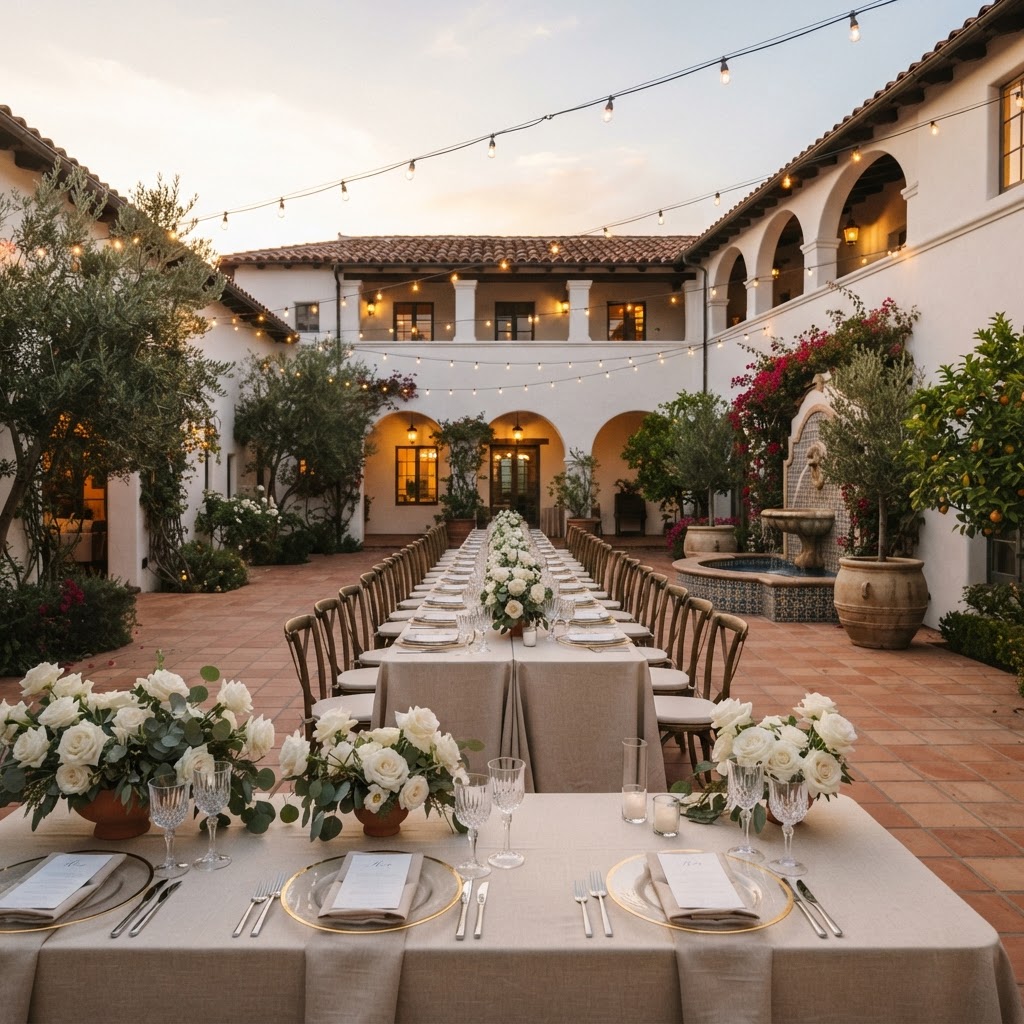
Pasadena, San Marino, Beverly Hills and the hills. Courtyards, tile and olive trees, with noise limits, neighbour rules and parking that usually needs valet.
The easiest answer for out-of-town guests, with the hotel block in the building. Expect minimums, union labour and a rooftop sound curfew.
Malibu, Palos Verdes and Santa Monica. Unbeatable light and a permit for almost everything: structures, alcohol, sound and parking.
The Arts District, downtown and Culver City. Volume, concrete and flexibility, with load-in docks, power and air conditioning to confirm.
Semi-inclusive pricing, parking, a rain plan and a member sponsor in some cases. Prime Saturdays are booked more than a year out.
Santa Ynez, Ojai, Temecula and the Antelope Valley. Total control and total responsibility: transport, lodging, generators, restrooms, heat and fire rules.
06 — Before you book
Ask these before a deposit leaves your account. A vendor who answers all ten without flinching is worth the date.
The rainy window, and the cheapest. Indoor venues and clear-day flexibility.
Warming up, green hills, occasional rain. Good availability across vendors.
The best months: warm days, cool evenings. June brings morning marine layer at the coast.
Hot inland, comfortable at the coast. Coastal venues are the safer choice.
Hot and dry with the clearest light, and the start of fire season.
Beautiful and risky: Santa Ana winds, heat and smoke risk. Have an indoor plan.
Cool evenings, festive city venues, and holiday competition for hotels and bands.
Plan it in SurelyPlan
Permit deadlines, vendor insurance, weather and smoke backup plans, budgets, client forms and a private portal for every vendor — all in one calm workspace.
For planners
Run every wedding from one workspace: timelines that hold your heat and rain plan, vendor rosters with insurance tracked, budgets, client forms and a private portal for each vendor.
For couples
Everything for one wedding in one calm place: the timeline, the guest-ready details, the budget and the vendors, without a spreadsheet holding it together.