Wind is the unglamorous problem
Anything loose on a rooftop or lakefront lawn will move — place cards, linens, arches, veils. Ask your venue what wind speed stops the outdoor ceremony, and where the backup is.
City guide — Chicago, Illinois
Chicago gives you a compact, walkable downtown, a deep bench of hotels and museums, and a lakefront that photographs better than almost anywhere in the country — for four months a year. The rest of the year is a different wedding, and the difference is entirely about being indoors, warm and well lit. Decide which of those two weddings you are having before you book anything.
01 — The season
From mid September to mid October the city is warm, dry and golden, and the lake is still swimmable in early September. Late May and June are the other window, with longer days and greener parks.
July and August are hot and humid with fast-moving afternoon storms, and the lakefront wind means an outdoor ceremony needs a covered backup that is not a tent in a car park. January and February are beautiful indoors and brutal outside: if you marry in winter, the venue does all the work and the photography plan has to live inside the building.
Anything loose on a rooftop or lakefront lawn will move — place cards, linens, arches, veils. Ask your venue what wind speed stops the outdoor ceremony, and where the backup is.
Water temperatures stay low into June, which keeps the shoreline cool and breezy. An evening ceremony in late May is colder than guests expect; say so on the invitation.
Late September sundown is around 7pm, early November around 4.45pm. That single fact decides whether you do first look portraits or after-ceremony ones.
02 — Geography
Chicago has three usable wedding geographies and they barely overlap. Downtown is walkable and hotel-rich. The neighbourhoods — West Loop, Logan Square, Pilsen — are loft and restaurant territory. The suburbs are garden estates and golf clubs, twenty to fifty minutes out.
Pick the geography first, because a suburb venue with a downtown hotel block is an hour each way at rush hour, and guests will spend the weekend in transit rather than at your wedding.
The Loop, River North and Streeterville put hotels, the river, the lake and the venue within walking distance. You pay for it in food and beverage minimums and parking.
Lofts, restaurants and rooftop space with real character, and some of the best food in the city. Load-in is tight and late-night sound is regulated.
The Botanic Garden, the Arboretum and the golf clubs west and north of the city give you grounds, parking and semi-inclusive pricing. Confirm the curfew and the drive to the nearest hotel block.
03 — Local rules
Chicago regulates alcohol, noise and public space separately, and the numbers on a quote are rarely the numbers you pay.
The venue must hold a liquor licence, or your caterer must, or you need a special event licence through the city. A venue that allows outside alcohol without a licensed server is a liability problem, not a bargain.
Lakefront ceremonies at Promontory Point, Northerly Island, Northerly or any park site need a park district permit, with rules on structures, sound and setup times. Apply early in peak months.
Most venues stop amplified music at 11pm or midnight, and outdoor sound ends earlier. Ask for the time, then build the send-off fifteen minutes before it.
Cook County sales tax on catering runs 10.25 percent, and venues add service charges and sometimes a room rental on top of the minimum. Ask for an all-in per-head number.
Hotel ballrooms typically require union labour and their own AV and power drops. If you want a band, ask what the hotel charges to plug it in.
04 — Venues
These are the categories planners here work with most, and what each one asks of you.
The Loop, River North and Streeterville. The safest answer for winter and for guests flying in. Big rooms, union labour, food and beverage minimums and prime Saturdays gone a year out.
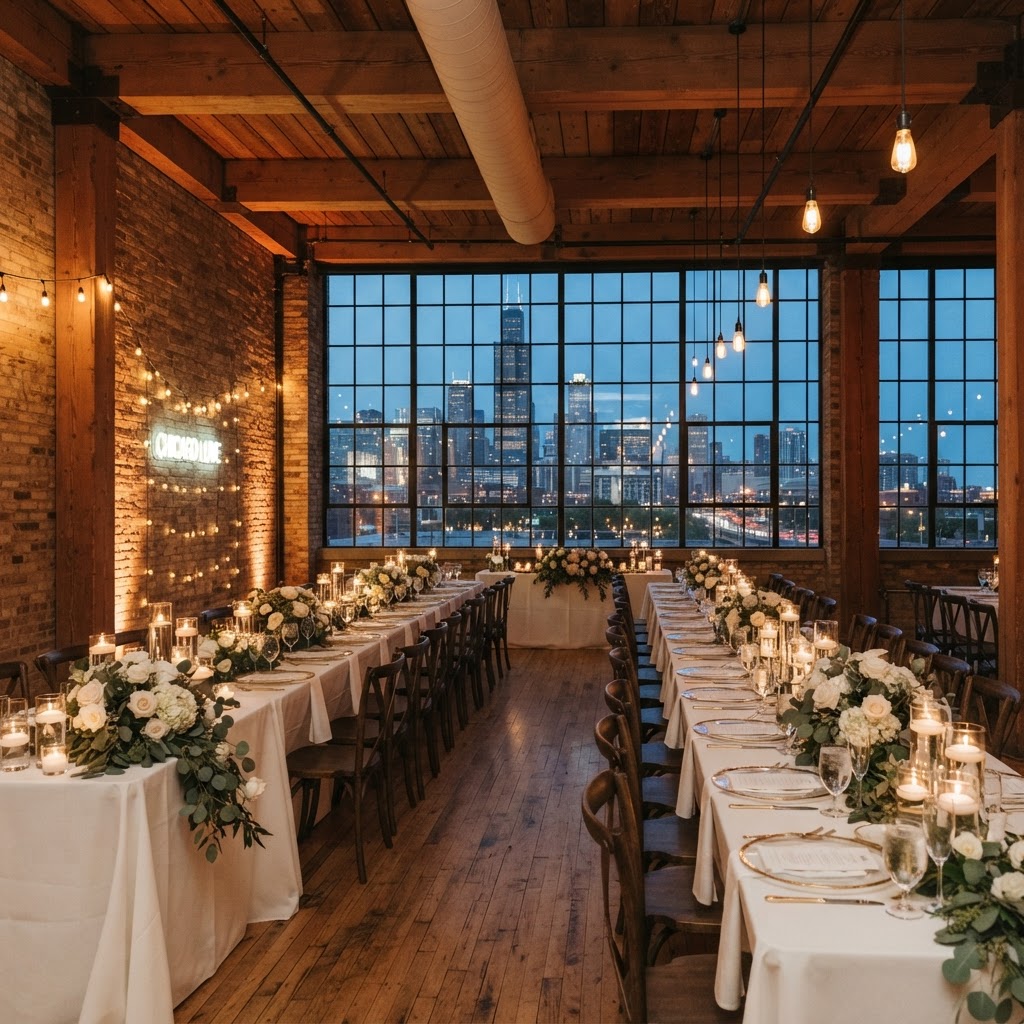
Brick, steel, timber and volume. Confirm air conditioning, the freight elevator, load-in windows, parking and the exact sound curfew.
The Field Museum, the Art Institute, the Museum of Contemporary Art and the Chicago History Museum. Unforgettable rooms with approved caterer lists, fixed load-in times and restrictions on flame and hanging anything.
Promontory Point, Northerly Island, the Riverwalk and the conservatories. Public, permitted and exposed: no amplification in many spots, hard setup windows and a rain plan you carry.
Chicago Botanic Garden, the Morton Arboretum and the golf and country clubs north and west. Grounds, parking and semi-inclusive pricing, with a curfew and a real drive back to the city.
Lake Geneva, New Buffalo and the southwest Michigan shoreline. Weekend houses and vineyard venues 90 minutes out, with transport, lodging and vendor travel all yours to arrange.
06 — Before you book
Ask these before a deposit leaves your account. A vendor who answers all ten without flinching is worth the date.
Coldest and cheapest. Indoor venues only; portraits inside, sunsets before 5pm.
Cold and unpredictable, with the first warm days. Vendors and venues are widely available.
Spring arrives properly. The lake stays cold, so warn guests about evenings.
Long days, green parks and peak pricing. Book well over a year ahead.
Hot, humid, with afternoon storms. Indoor receptions and covered ceremonies.
The best months in the city. Prime Saturdays go first.
Crisp and festive, with early sunsets and holiday party competition.
Plan it in SurelyPlan
Licence and insurance tracking, weather backup plans, budgets, client forms and a private portal for every vendor — all in one calm workspace.
For planners
Run every wedding from one workspace: timelines that hold your heat and rain plan, vendor rosters with insurance tracked, budgets, client forms and a private portal for each vendor.
For couples
Everything for one wedding in one calm place: the timeline, the guest-ready details, the budget and the vendors, without a spreadsheet holding it together.