Pollen is a photography problem
Pine pollen settles on cars, chairs and dark suits for three weeks in late March and April. If you marry then, plan for a covered getting-ready space and warn anyone with allergies.
City guide — Atlanta, Georgia
Atlanta is forgiving as a wedding city: a genuine spring, a long gold autumn, a deep bench of historic homes, gardens and hotels, and an airport almost everyone can fly into directly. The trade-offs are traffic, spring pollen and a summer that turns humid and stormy by early afternoon. Add the college football calendar and you have the four things that decide an Atlanta wedding.
01 — The season
October and early November in Atlanta are close to perfect: 70s by day, cool nights, clear light and the dogwoods turning. April and early May are the other window, with everything in bloom and pollen coating every surface.
June through September is hot and humid with thunderstorms that build in the afternoon and clear by evening. Outdoor ceremonies in July and August should be pushed to 7pm or moved indoors, and every outdoor plan needs a covered backup at the same venue.
Pine pollen settles on cars, chairs and dark suits for three weeks in late March and April. If you marry then, plan for a covered getting-ready space and warn anyone with allergies.
Summer storms arrive between 3 and 6pm and are often brief but violent. Decide the call time and who makes it — waiting twenty minutes under cover is usually the better choice.
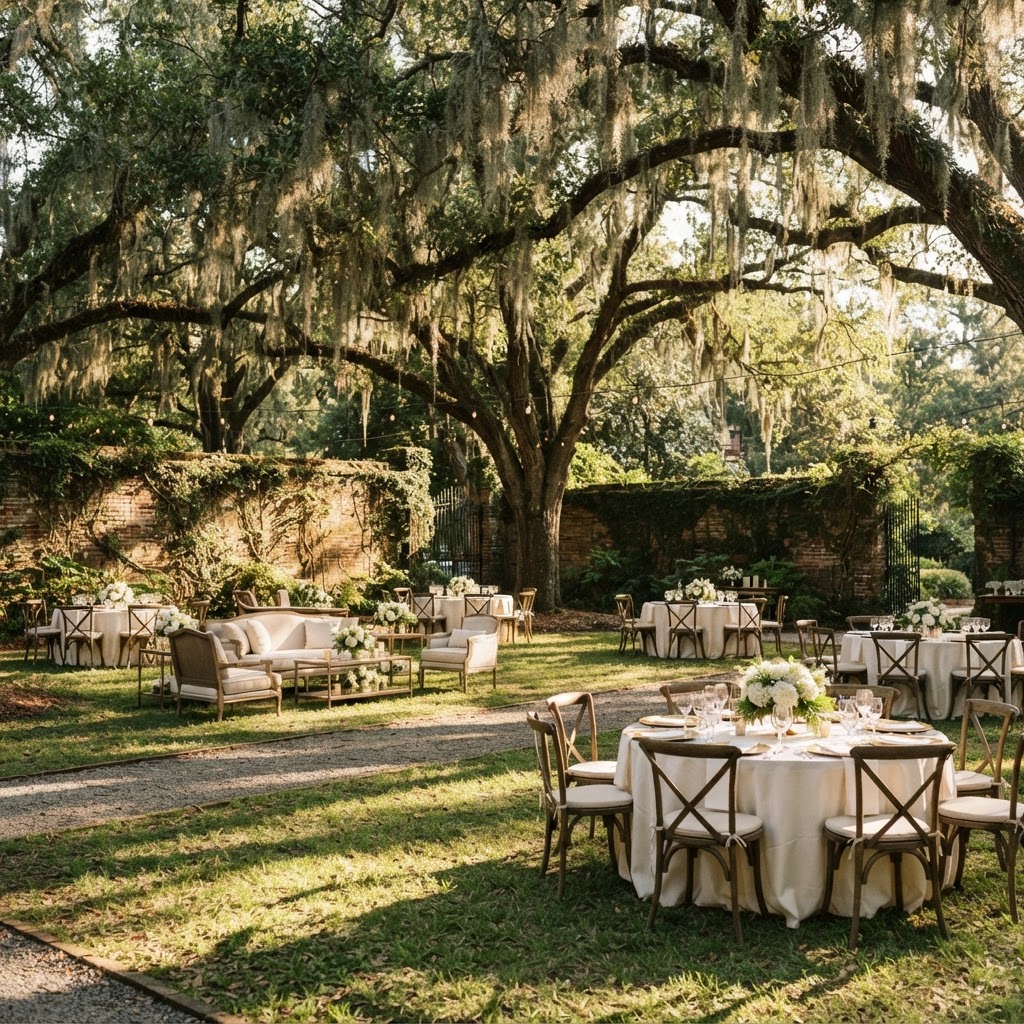
An October reception outdoors after 9pm needs heaters or wraps. Garden venues under old trees get damp quickly after sunset.
02 — Geography
Atlanta spreads north and east. A Buckhead or Midtown wedding is walkable and hotel-rich. Alpharetta, Roswell and Milton are garden and golf-club country. Dahlonega and the north Georgia mountains are an hour to ninety minutes out and behave like destination weddings.
Traffic on the Perimeter is the single biggest planning constraint. If the venue and the hotel block are not on the same side of I-285, budget coaches and add 30 minutes to every estimate, especially on a Friday.
Hotels, churches, gardens and museums within a few minutes of each other, and the easiest option for guests flying in.
Historic homes, neighbourhood venues and restaurants with real character, plus a short drive to downtown hotels.
Dahlonega, Ellijay, Blue Ridge and Serenbe. Views and space, with mountain roads, cooler nights, limited cell service and vendor travel to plan for.
03 — Local rules
Georgia licenses alcohol at the state and county level, city parks need permits, and autumn Saturdays reorganise the entire metro area.
Either the venue holds an on-premises licence or your caterer does, and a licensed server must pour. County rules differ — a venue in Fulton and one in Gwinnett may not operate the same way.
Piedmont Park, the Atlanta Botanical Garden and the city’s historic homes all require permits or approved-vendor lists, with fixed setup windows and rules on structures, flame and sound.
Georgia, Georgia Tech and the SEC schedule fills hotels and pulls vendor teams from late August to the end of November. Check the home-game calendar before you commit to a fall date.
Dragon Con over Labor Day, the Peachtree Road Race on 4 July and major convention weeks all tighten hotel blocks downtown.
Expect 20 to 24 percent service charge plus sales tax, and parking or shuttle fees in-town. Ask for an all-in per-guest number before comparing venues.
04 — Venues
These are the categories planners here work with most, and what each one asks of you.
The Swan House, Callanwolde, the Atlanta History Center and the botanical garden. Magnificent and rule-bound: approved caterers, fixed load-in, no open flame in many rooms.
Buckhead, Midtown and downtown. The easiest answer for out-of-town guests, with minimums, union labour and a room that needs substantial décor.
Brick, timber and volume with real character. Confirm air conditioning, load-in access, parking and the sound curfew.
Serenbe, Dahlonega and the Blue Ridge foothills. Space and views, with mountain roads, cooler nights, generator power and vendor travel to arrange.
Semi-inclusive pricing, parking and a built-in rain plan, sometimes with a member sponsor. Fall Saturdays and spring dates book first.
Historic churches, the Fox Theatre and the arts centres. Beautiful and tightly scheduled — ask about setup days, kitchen access and photography rules.
06 — Before you book
Ask these before a deposit leaves your account. A vendor who answers all ten without flinching is worth the date.
Cool and quiet, the cheapest month for venues and hotels. Indoor celebrations work well.
Warming up fast, with pollen arriving late in the month. Good availability.
Beautiful and busy, with heavy pollen and graduation weekends in May.
Hot, humid and stormy. Evening ceremonies and indoor receptions.
Still hot and humid, with football weekends filling hotels and vendor calendars.
The best months in Atlanta. Prime Saturdays go first; check the home-game schedule.
Cool and festive, with holiday party competition for venues and bands.
Plan it in SurelyPlan
Vendor rosters with insurance tracking, weather backups, football-season date checks, budgets and client forms — all in one calm workspace.
For planners
Run every wedding from one workspace: timelines that hold your heat and rain plan, vendor rosters with insurance tracked, budgets, client forms and a private portal for each vendor.
For couples
Everything for one wedding in one calm place: the timeline, the guest-ready details, the budget and the vendors, without a spreadsheet holding it together.